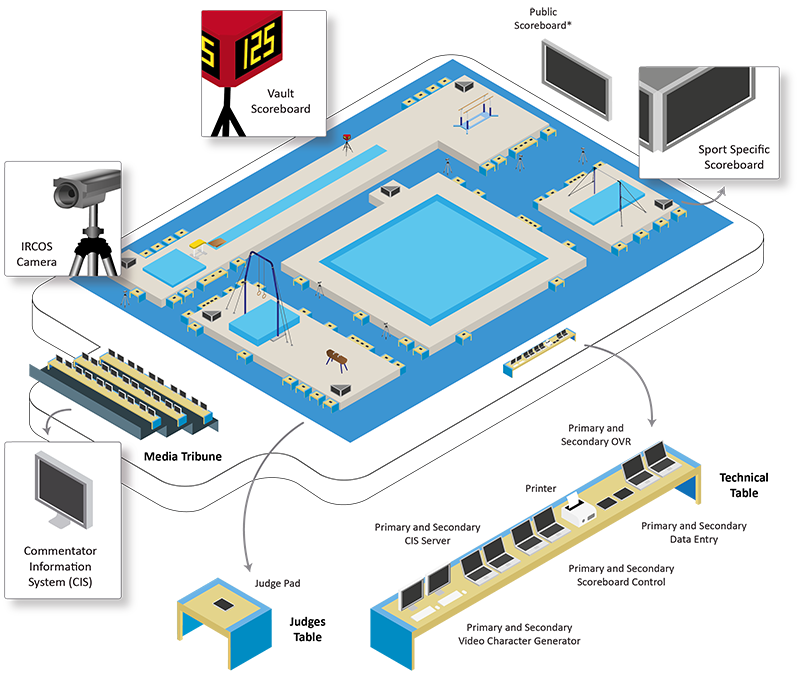
With roots in Ancient Greece, Artistic Gymnastics is as ancient as it is spectacular, combining speed, strength, power and flexibility with tumbling and acrobatic skills, all performed with an emphasis on style. On all events, gymnasts are judged on difficulty of the exercise, execution, along with dynamics, including height and distance from apparatus, and must show strength, flexibility, balance and rhythm.
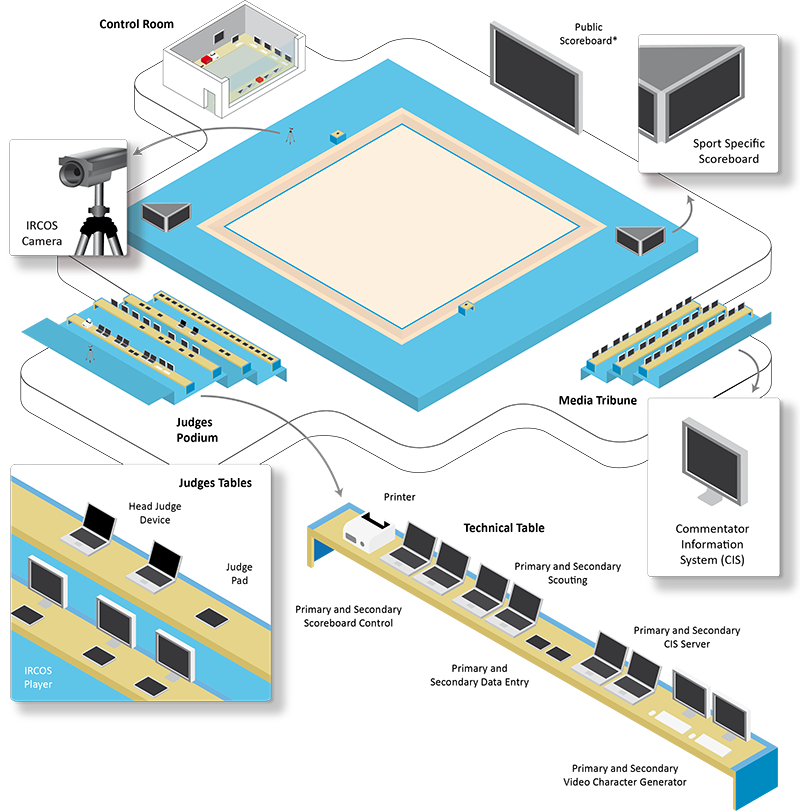
In this gymnastic discipline, athletes perform to music and work with different apparatus. They are judged on difficulty, artistry and execution. Swiss Timing has worked with the International Gymnastics Federation (FIG) since 1987 and provides scoring and judging systems that are regularly updated following the ever-evolving rules of rhythmic gymnastics.
Aerobic gymnasts demonstrate dynamic moves, strength, flexibility, coordination, and musicality in routines. Swiss Timing delivers scoring systems that allow judges’ points to be correctly and quickly recorded in routines that include elements in the categories of dynamic strength, static strength, jumps, and flexibility/balance.
The International Trampoline Federation merged with the International Gymnastics Federation in 1998, and two years later, trampoline became part of the Olympic Games as an FIG discipline. Trampoline gymnasts in competition are judged on four main factors: execution, difficulty, horizontal displacement and time of flight. Swiss Timing’s timing and scoring system allows the quick recording of judges’ scores on execution and difficulty, and electronically measures the time of flight and horizontal displacement.
Competitors are scored for difficulty, execution, and artistry (including choreography, musicality, expression, and partnership) by panels of specialist judges. Swiss Timing’s dedicated primary and secondary scoring systems ensure that the judges’ results are quickly and accurately recorded and distributed to the scoreboards and the media information system (MIS).
In FIG events, the Parkour zone is dotted with a variety of blocks, walls and bars designed to reflect the different obstacles found in urban areas. To overcome them, athletes must use a series of techniques, such as cat leap, arm jump, drop jump and wall run. There are two categories: Speed and Freestyle. In the speed event, athletes must clear obstacles as quickly as possible to reach the finish line in the shortest possible time. In the freestyle event, athletes use the obstacles to demonstrate their style and creativity, while being judged on their technical performance.